> For the complete documentation index, see [llms.txt](https://docs.rowsncolumns.app/llms.txt). Markdown versions of documentation pages are available by appending `.md` to page URLs; this page is available as [Markdown](https://docs.rowsncolumns.app/configuration/features/structured-references.md).
# Structured references
Add structured data to Spreadsheet and reference them using semantic formulas
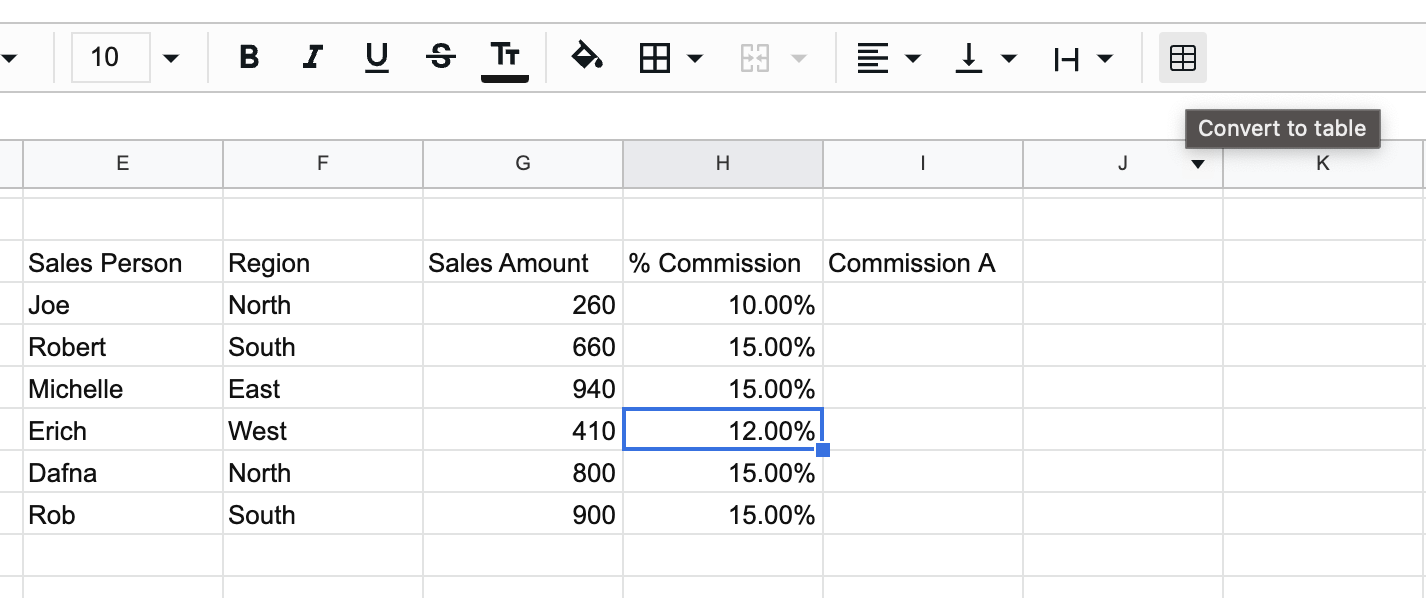
Spreadsheet allows you to convert any data in the sheet to an Excel Table. Select a dataset, or add a dataset using an Array formula such as `=IMPORTDATA`
Convert dataset to Structured table
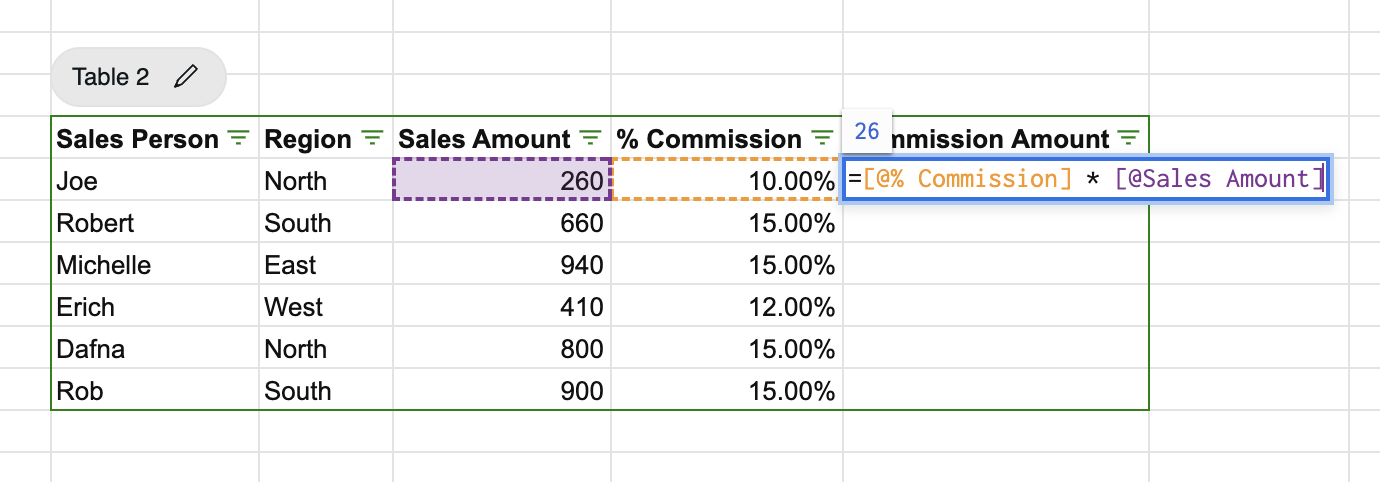
You can now add formulas in your table referencing to the column names
Formulas referencing column names
## Calculated Columns
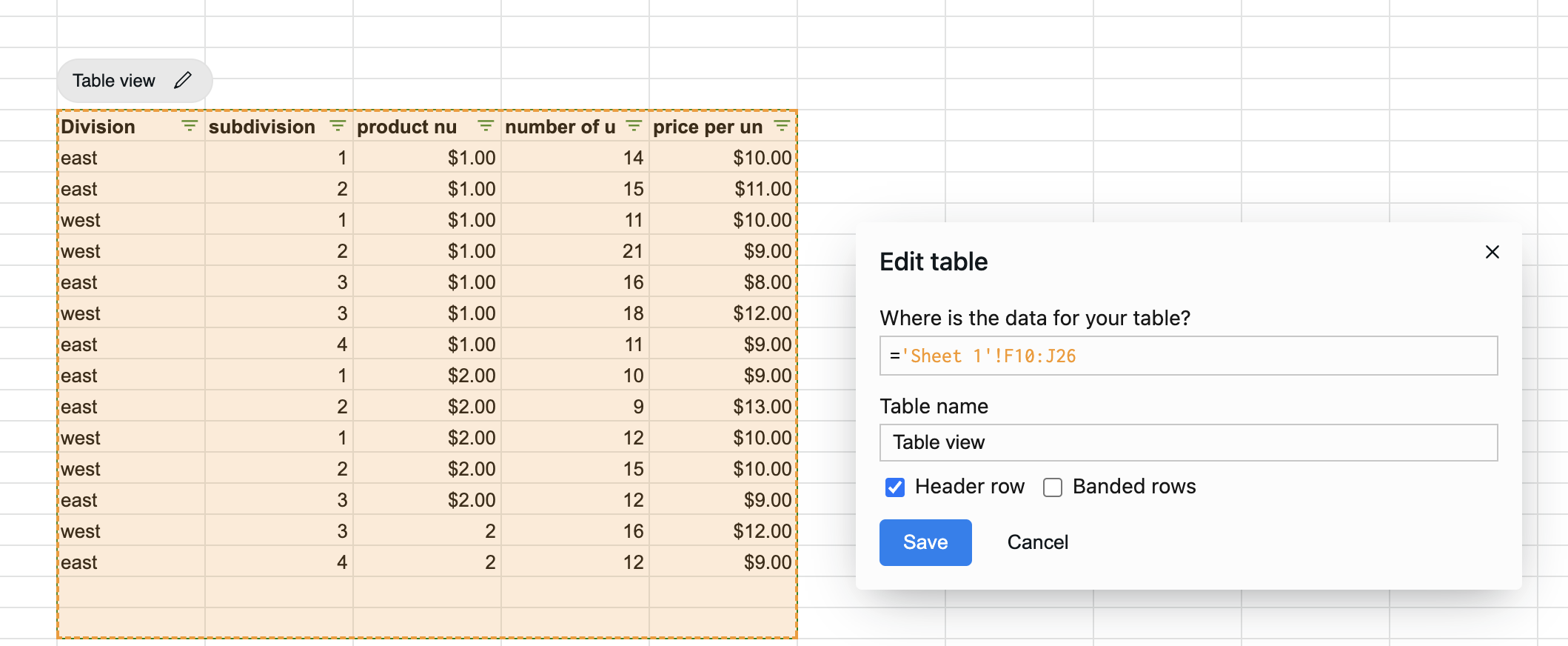
Dynamic columns can be added just like Excel. Users can edit the table, add multiple columns and extend the table range to give the column additional features such as filtering, sorting etc
## Joining tables
You can join tables and create dynamic columns from multiple datasources. Structured formulas refer tables using `Table name` . For example, in the above table, you can add formulas like `=Table 2[@Region]`